
You notice odd smells under the house and wonder what they mean for your home. This article helps you spot smells and signs that usually point to moisture issues in the crawl space, so you can decide if the space needs repair, sealing, or professional help.
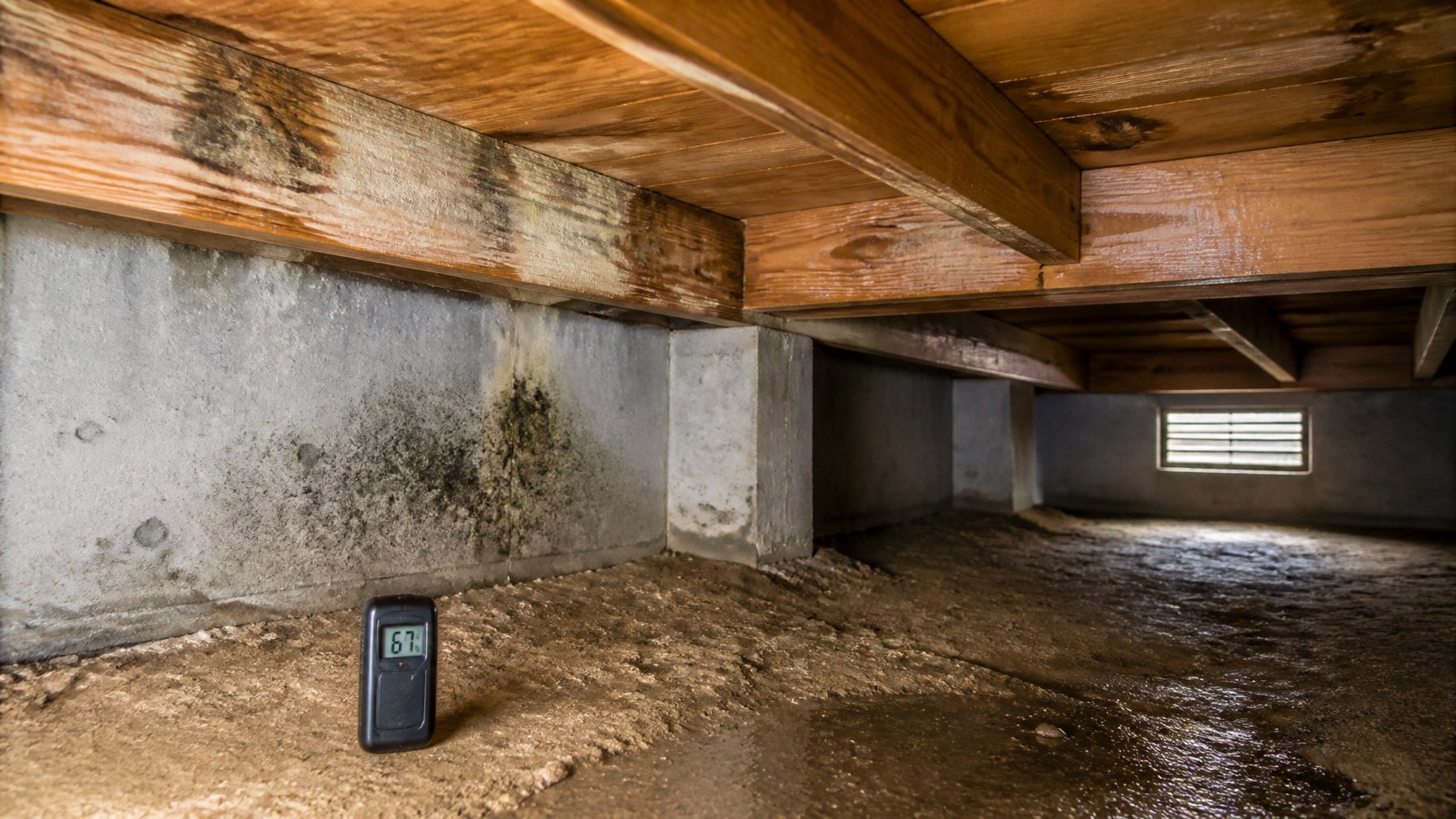
Knowing these clues helps you choose the right crawl space encapsulation options and avoid bigger damage later. Durham homeowners can use the checklist to compare vapor barriers, drainage fixes, and dehumidifiers, and to know what questions to ask a contractor or service.
1) Musty, damp smell near access hatch
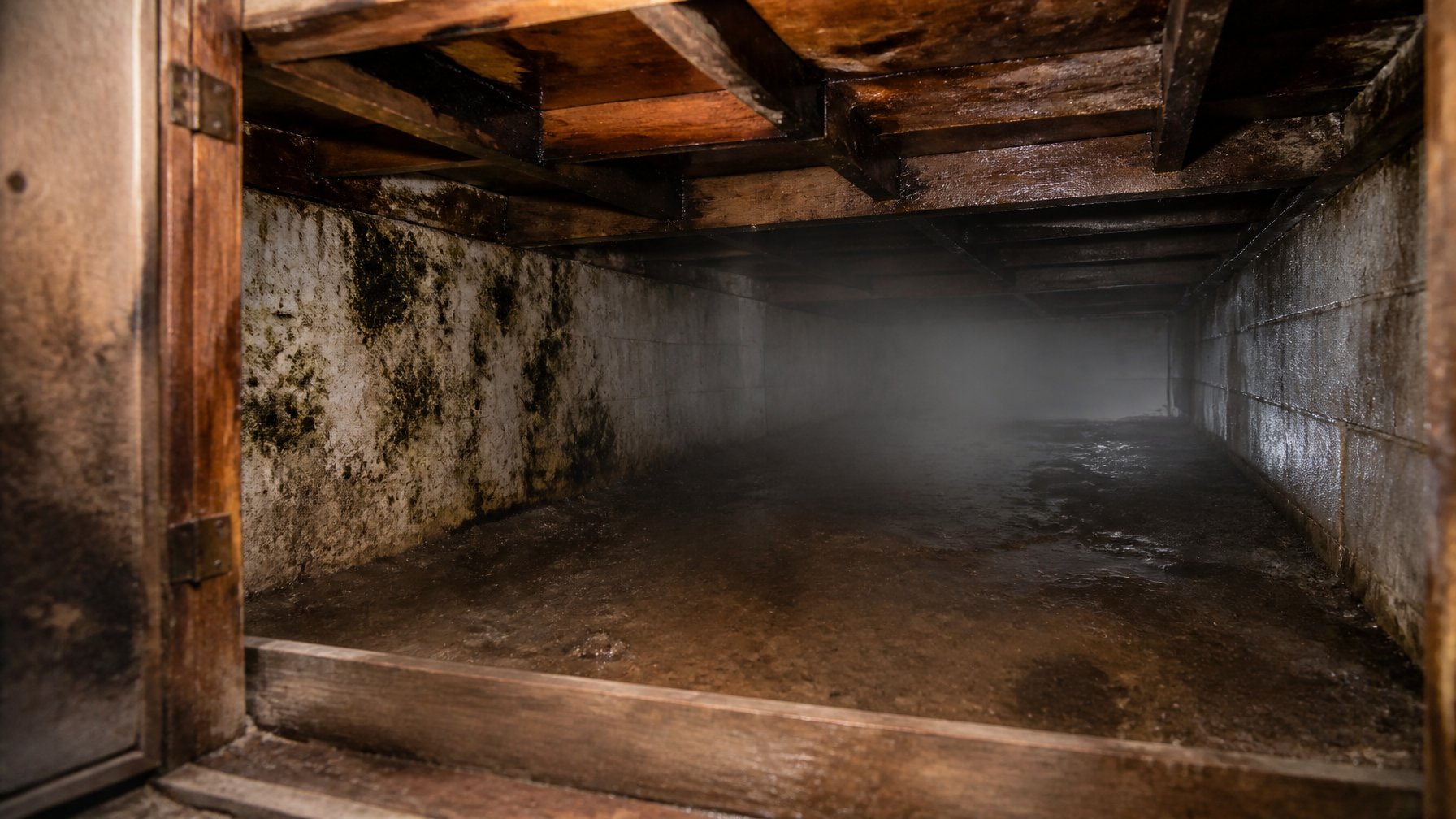
A musty, damp smell by the access hatch often means warm, humid air is entering the crawl space. Homeowners should compare the smell intensity with other areas; stronger odors at the hatch point to poor sealing or direct moisture entry.
They should ask if the hatch has weatherstripping and a tight latch, and check for gaps or warped wood. Inspect for condensation on the hatch or nearby framing after a rainy day to confirm water intrusion.
Tradeoffs include sealing the hatch versus adding ventilation or a dehumidifier. Sealing reduces air exchange and smell quickly, while ventilation or a dehumidifier addresses underlying humidity. For professional help or services, see crawl space waterproofing.
2) Sharp, ammonia-like odor indicating urine or pest droppings
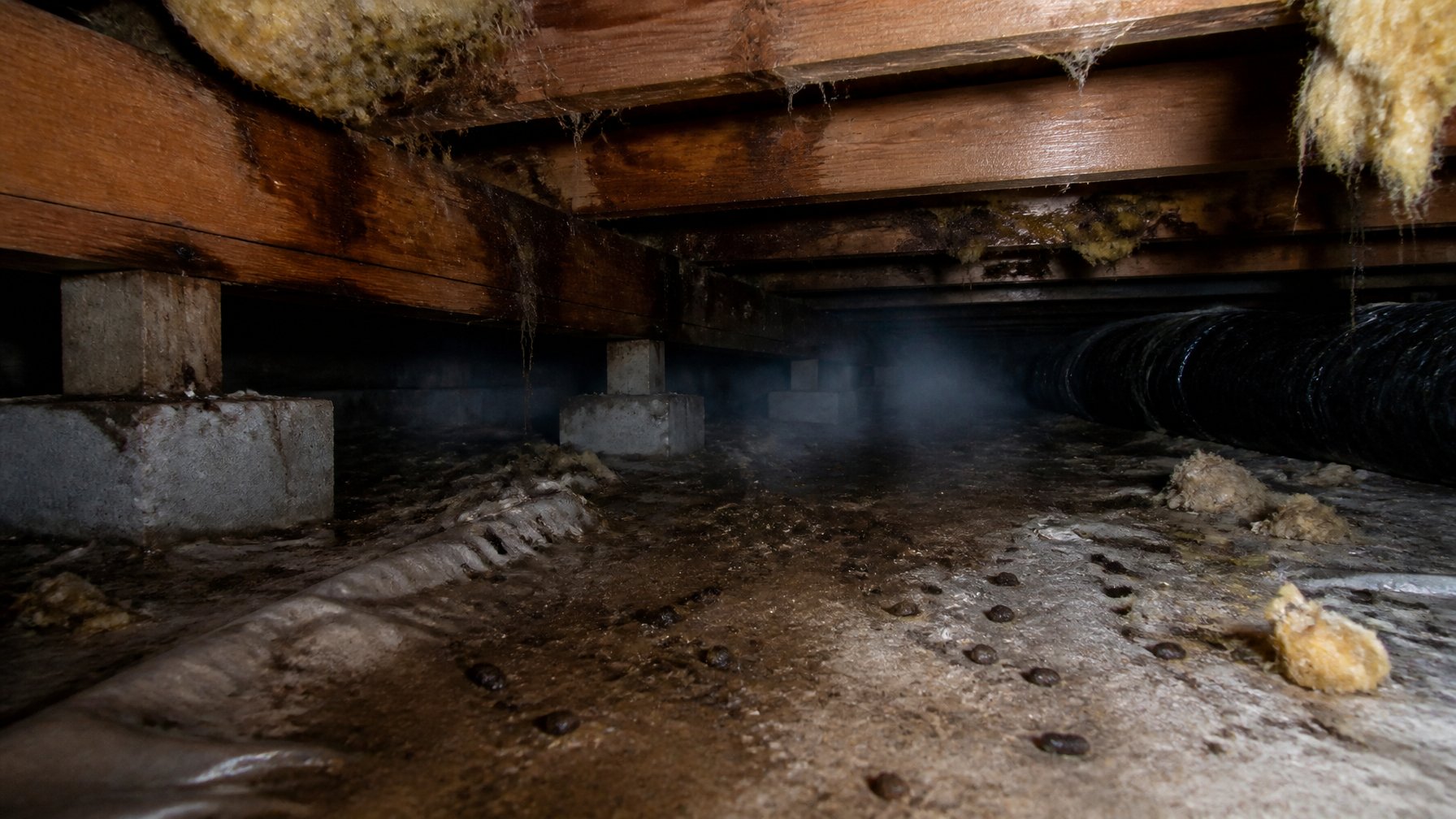
A sharp, ammonia-like smell often means animal urine or accumulated droppings in a damp crawl space. Homeowners should compare the odor to household ammonia and note whether it comes from one spot or several.
They should look for droppings, urine stains, or nesting materials near vents, pipes, and insulation. Ask whether neighbors have had pest issues and check recent entry points like gaps or damaged vents.
If moisture is present, urine can soak into wood and insulation, making odors last longer. The tradeoff is between quick cleanup and deeper remediation; surface cleaning may help short term, but wet insulation or soaked framing often needs replacement.
For help locating sources and choosing cleanup methods, search crawl space services. Images should show realistic home-improvement scenes like a worker inspecting insulation, droppings near a beam, or a vent gap.
3) Sweet, chemical scent from standing water or fuel leak
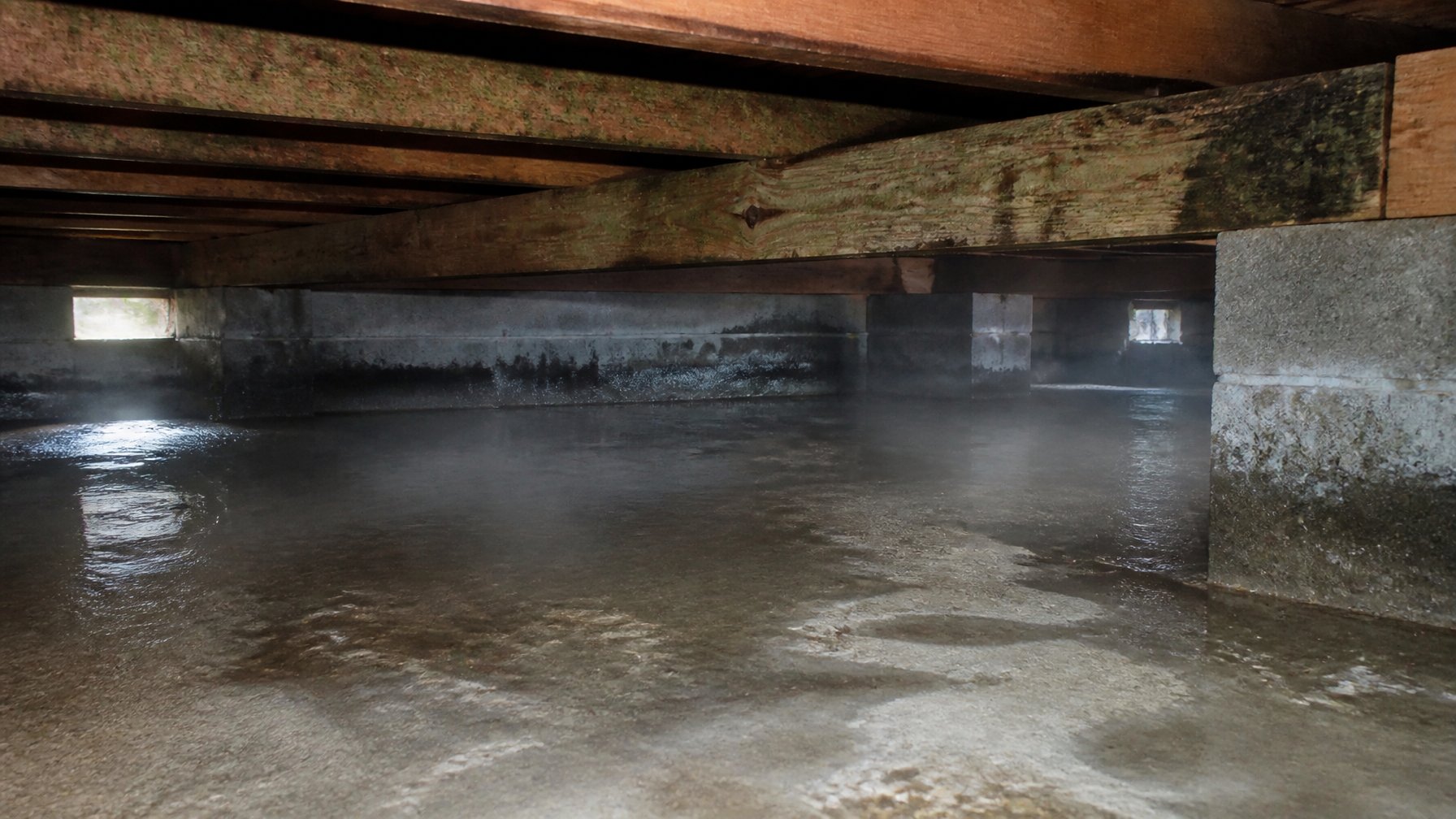
A sweet, chemical smell often means standing water mixed with algae or sewage, or a fuel leak from an appliance or stored container. Homeowners should compare the scent near the low points of the crawl space and next to fuel tanks, furnaces, or water heaters to find the source.
They should ask whether recent flooding, spills, or fuel deliveries happened, and check for pooled water or oily slicks. If fuel or chemical odor is present, ventilate the area and avoid sparks; consider calling a qualified service for fuel leaks.
Weigh the tradeoff between quick drying with a fan versus a dehumidifier and permanent drainage fixes. For help with moisture barriers, drainage, or fuel-safety inspections, visit the homepage.
4) Mildew on wooden joists or subfloor visible from crawl space
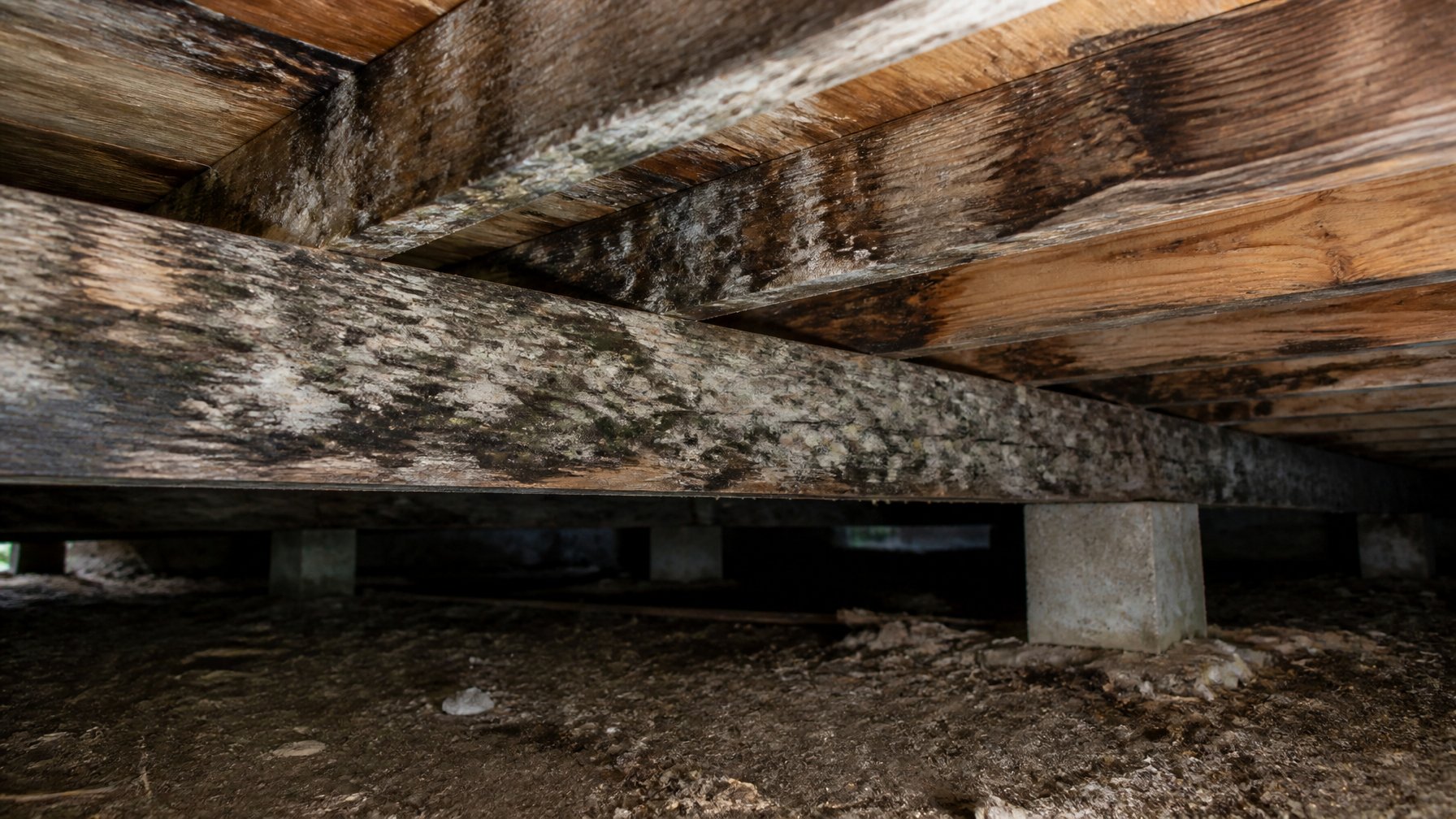
Mildew on joists or the subfloor often smells musty and shows as gray or dark patches. Homeowners should compare affected areas to nearby dry wood and note if the mildew spreads after rain or humid days.
They should ask whether ventilation or a vapor barrier is in place and if a dehumidifier has been tried. Deciding between adding ventilation, installing a vapor barrier, or using a dehumidifier depends on cost, speed, and how much moisture returns.
They can check relative humidity with a small meter and look for water stains or insulation that feels damp. For help evaluating options, see crawl space services.
5) Black or white powdery mold colonies on insulation
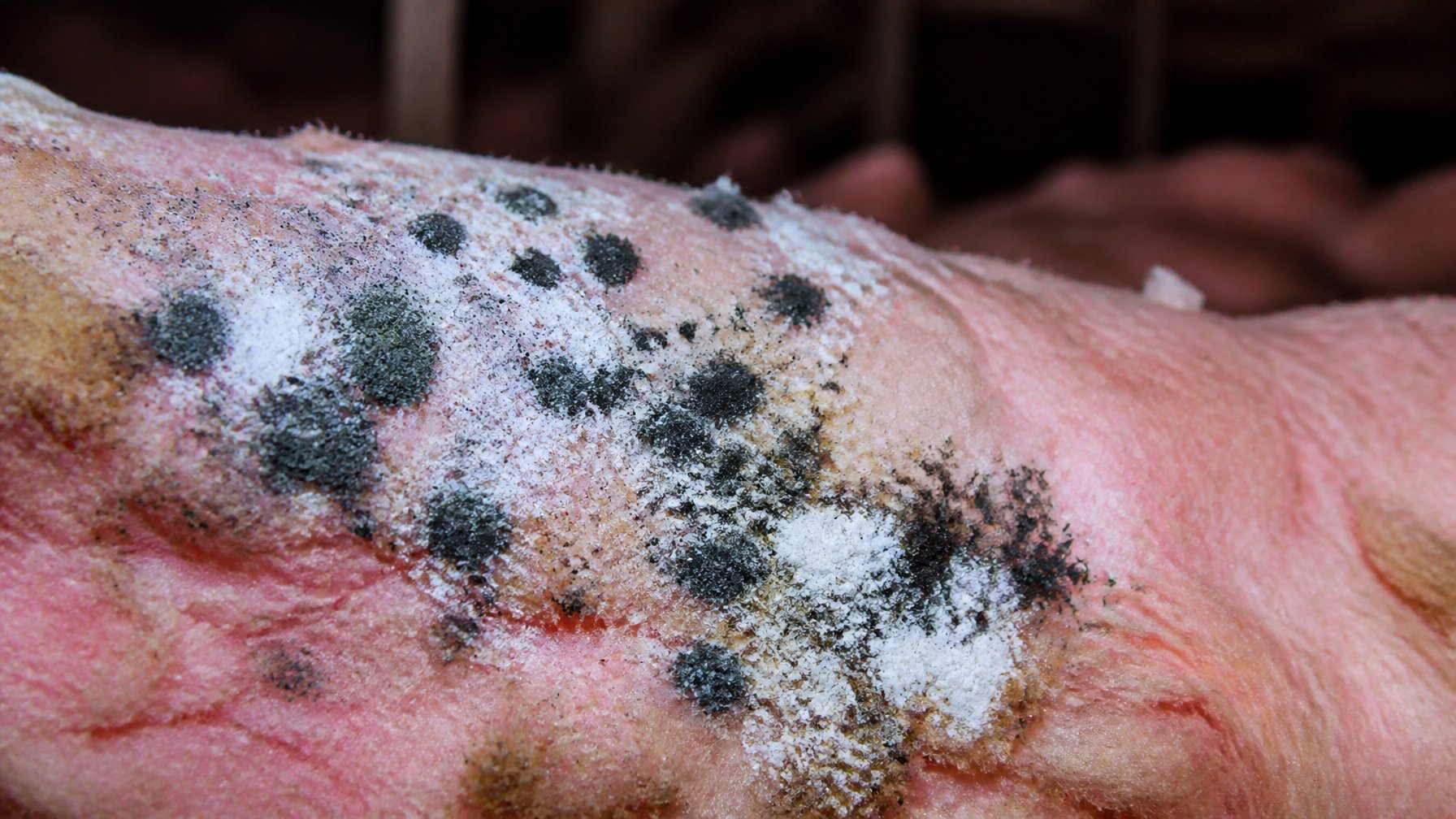
Black or white powdery mold on insulation often means persistent dampness. Homeowners should compare how much mold covers the insulation and whether it returns after drying. If colonies are widespread, they should ask about improving crawl space ventilation or adding a vapor barrier.
They should weigh cost versus long-term risk. Replacing soaked insulation costs more but can stop spores from spreading. For repair options and moisture control, check crawl space encapsulation on the homepage.
They should also test for active mold growth if occupants have health symptoms. A professional air or surface test helps decide if removal or containment is needed. Keep records of moisture sources to prevent recurrence.
6) Rusty metal smell from corroding HVAC or ductwork
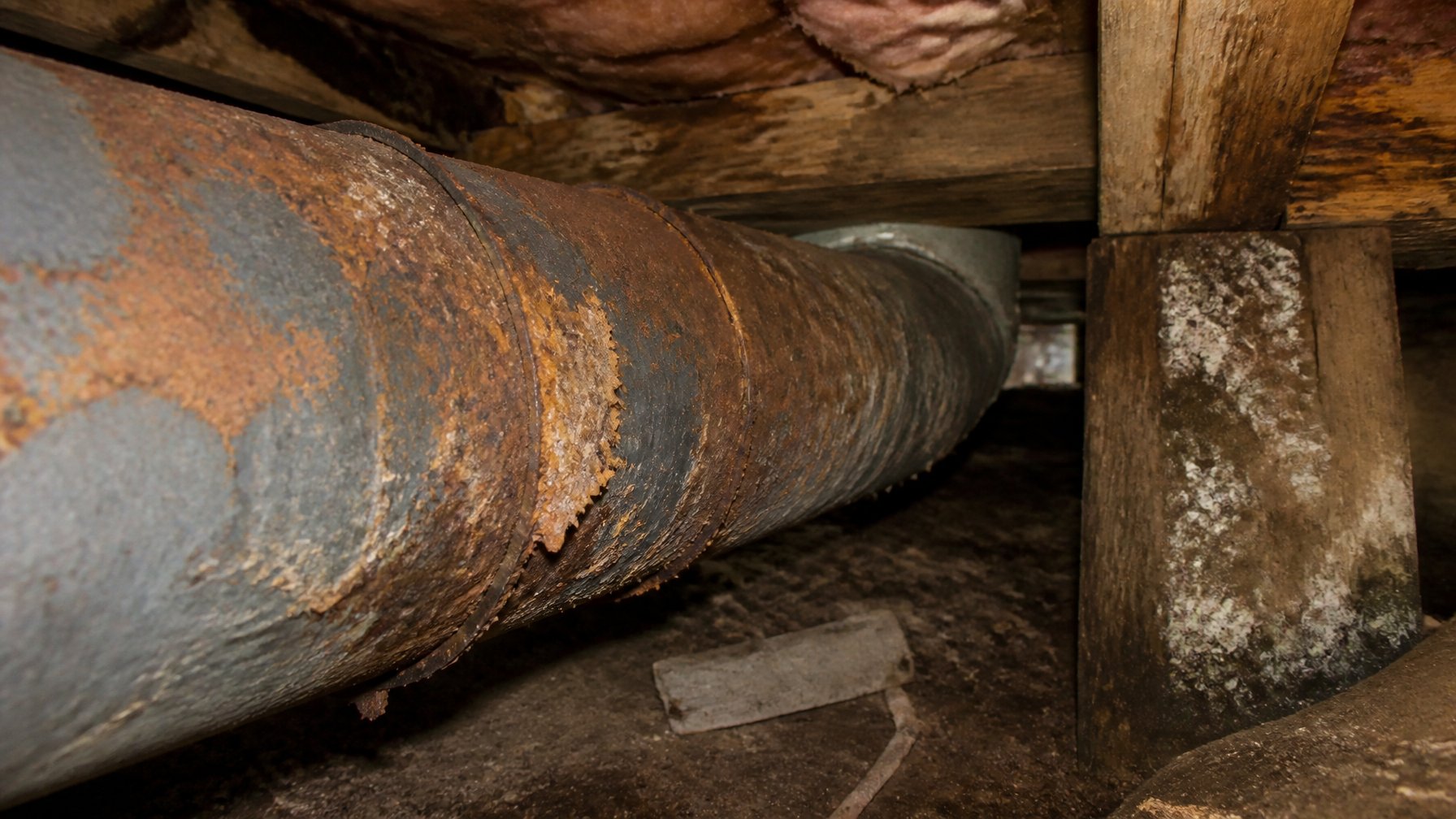
A rusty, metallic smell often comes from damp conditions that speed up corrosion on HVAC parts and ductwork. Homeowners should compare the smell near the air handler, vents, and crawl space access to find the strongest source.
They should ask an HVAC tech to inspect for rust, loose seams, or corroded coils. Tradeoffs include repairing small rust spots now versus replacing heavily corroded sections that can leak air and water.
Check for visible rust, flaking metal, or brownish stains on ducts and nearby insulation. If the smell appears during system use, it likely moves through the vents; if it’s constant, the problem may sit in the crawl space.
Consider sealing duct joints and improving crawl space drainage or a dehumidifier to slow future corrosion. For professional help, see crawl space services.
7) Condensation beads on pipes or foundation walls
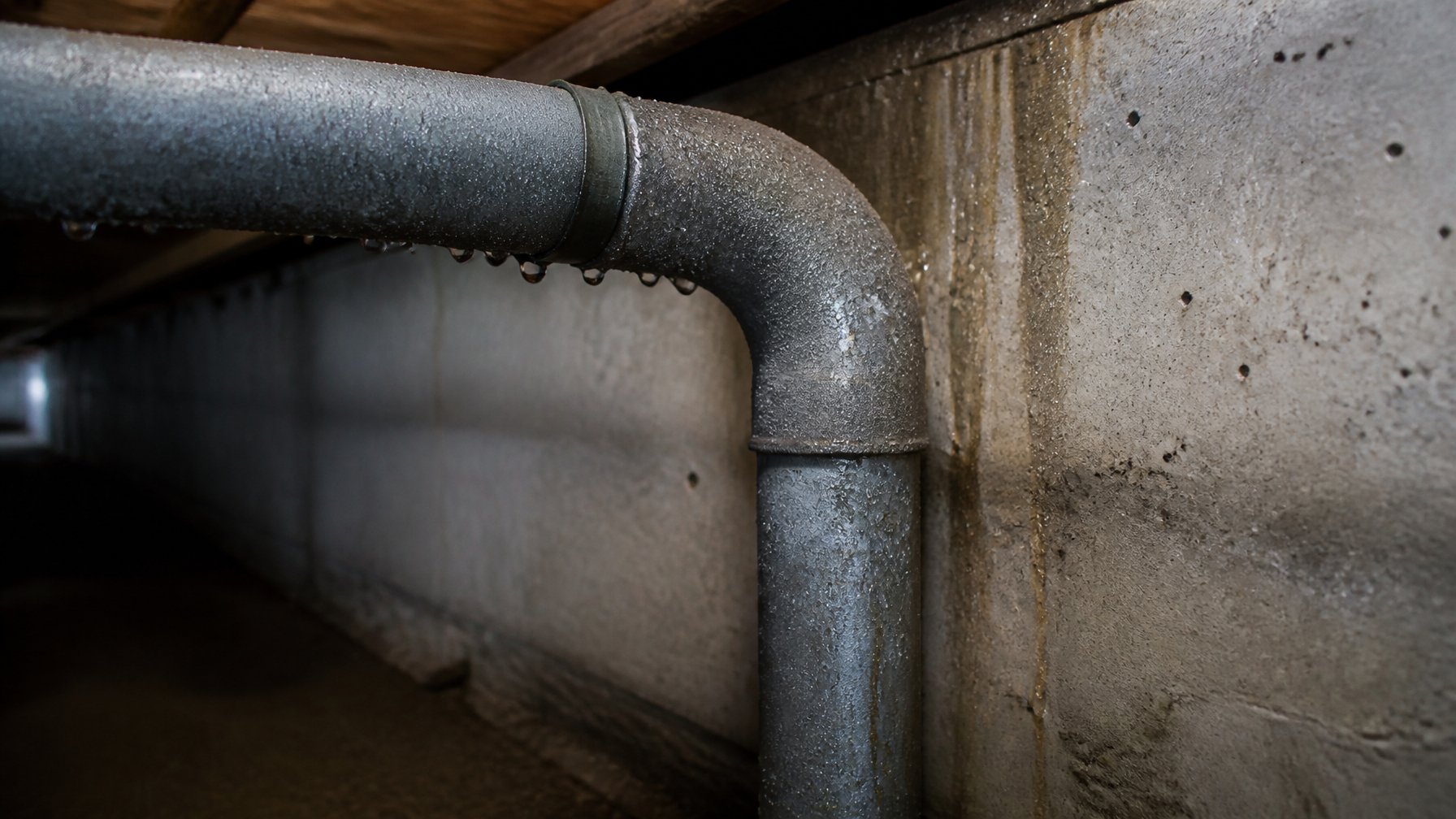
They see small water beads on cold pipes, ductwork, or foundation walls. This shows high humidity in the crawl space and poor air control.
Homeowners should compare the amount and frequency of beads. A few drops after heavy use is different from steady wetness every morning. Ask whether insulation on pipes is intact and if vents or fans run properly.
The main tradeoff is fixing humidity now versus delaying and risking mold or rot. Improving pipe insulation, adding a dehumidifier, or sealing foundation vents can help. For more guidance on moisture control, visit Crawl Space Services.
8) Warped or sagging floorboards above crawl space
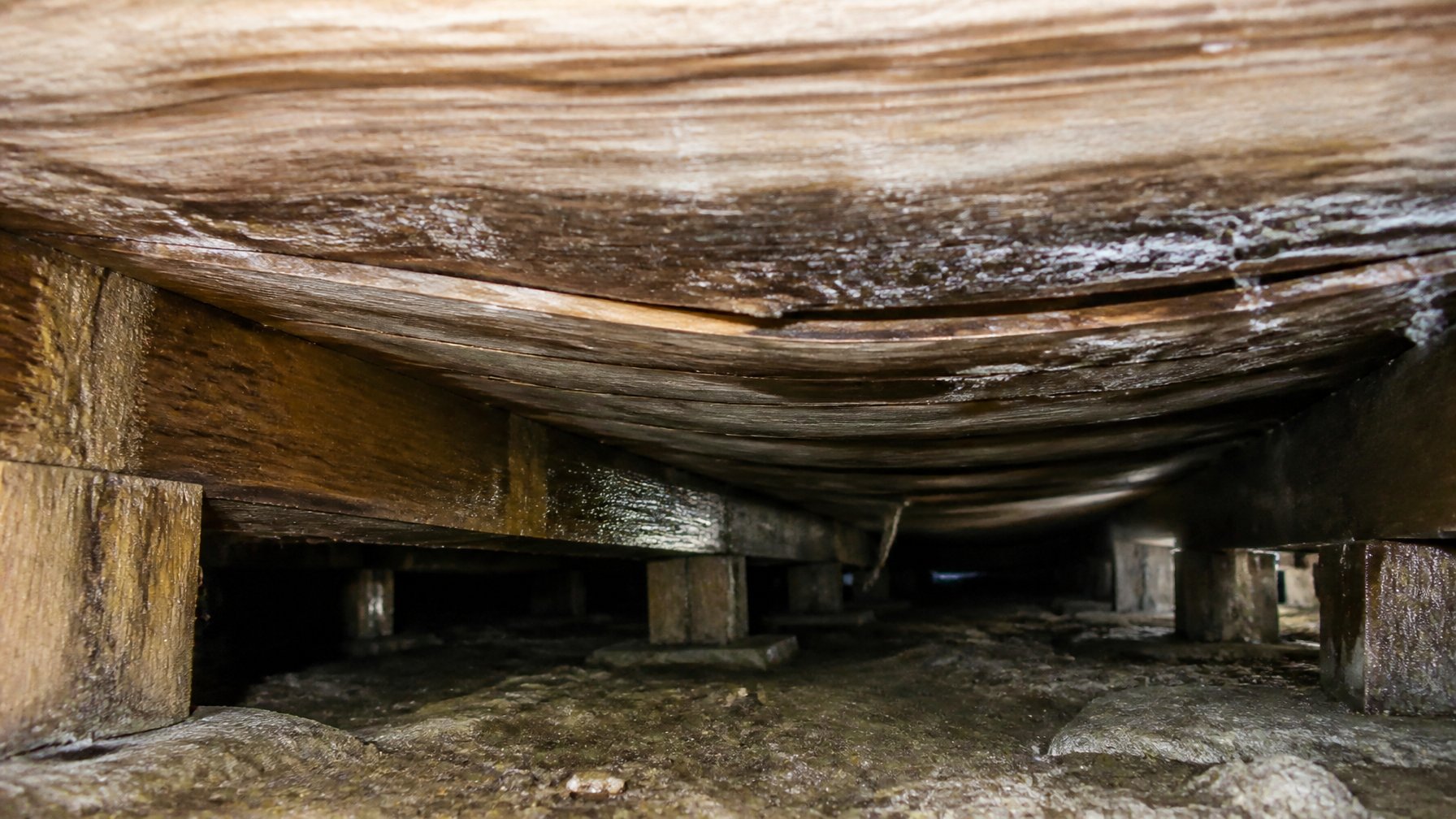
If floorboards feel springy, creak a lot, or visibly dip, moisture in the crawl space may have weakened joists or subflooring. They should compare suspect areas to firmer spots elsewhere and note how wide or long the sagging is.
Homeowners should ask if vents are blocked, if insulation is wet, and whether a vapor barrier exists. The tradeoff: sealing vents and adding a dehumidifier reduces moisture but may require better mechanical ventilation.
They can look for water stains, mold, or wood rot under the floor where accessible. For repair options and prevention tips, see crawl space encapsulation.
9) Water stains or efflorescence on foundation walls
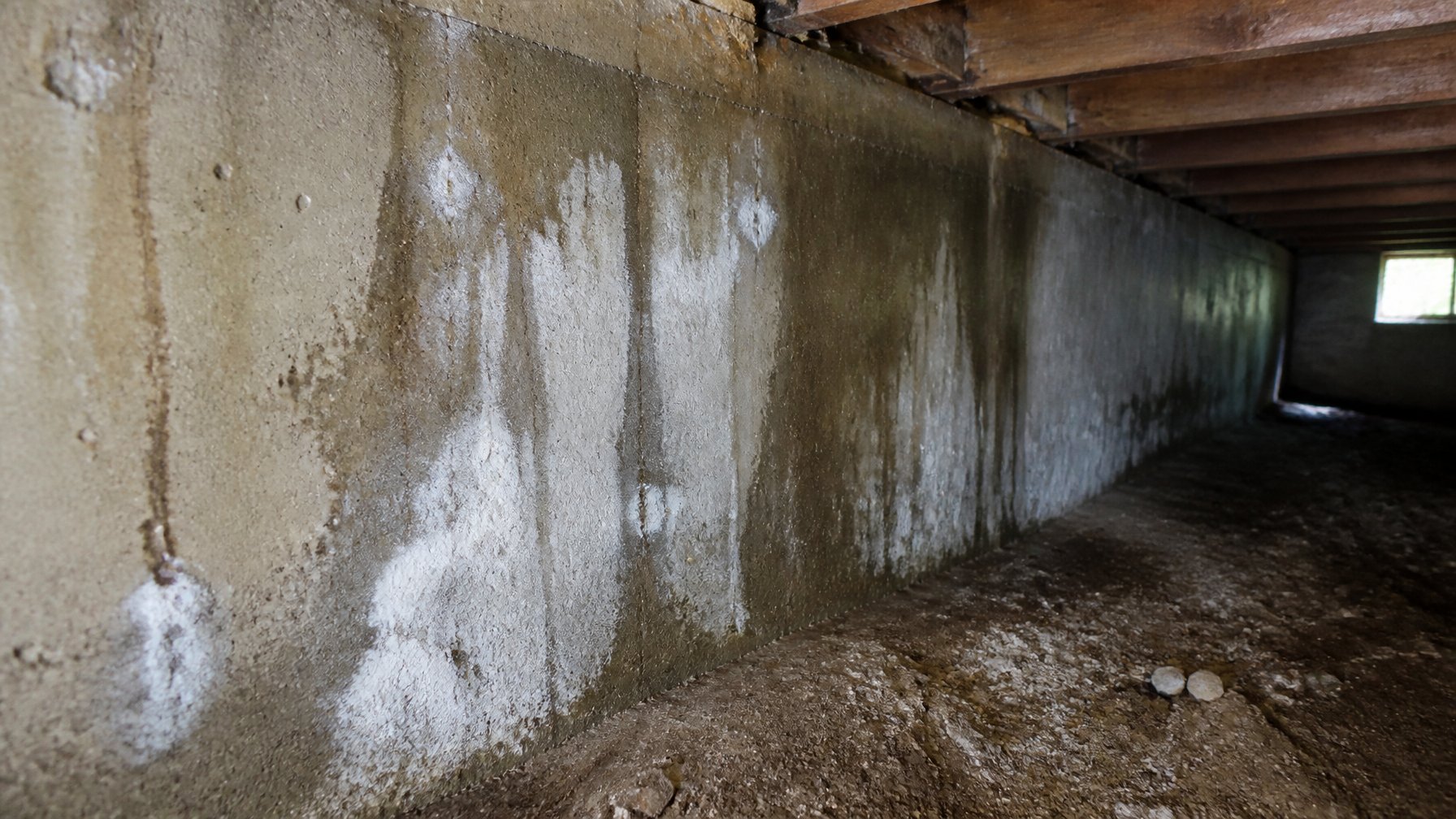
Water stains or white, powdery efflorescence on foundation walls show moisture has moved through the concrete or masonry. Homeowners should compare fresh, dark stains to older, chalky deposits to judge whether the problem is active or past.
They should ask where the water is coming from: poor exterior grading, clogged gutters, or plumbing leaks. The tradeoff is fixing outside drainage first versus installing a vapor barrier or dehumidifier inside; exterior fixes usually stop the source, but inside controls manage current dampness.
They should check nearby insulation and wood for mold, rot, or odor and note if stains appear after storms. For next steps, search crawl space waterproofing on the homepage to find services that can assess exterior grading, foundation cracks, and interior moisture controls.
10) High humidity reading (>60%) from a hygrometer in crawl space
If the hygrometer shows over 60% relative humidity, it often means moisture is present and not drying out. Homeowners should compare readings from different spots and times of day to check consistency.
They should ask where the moisture is coming from: plumbing leaks, poor drainage, or humid outdoor air. Tradeoffs include running a dehumidifier versus improving ventilation or sealing crawl space vents.
Measure again after any change to see if humidity drops below 50%. For guidance on dehumidifiers, vapor barriers, and sealing options, see Crawl Space Moisture Control. Images should look like realistic home-improvement photos of crawl spaces, hygrometers, and dehumidifiers.